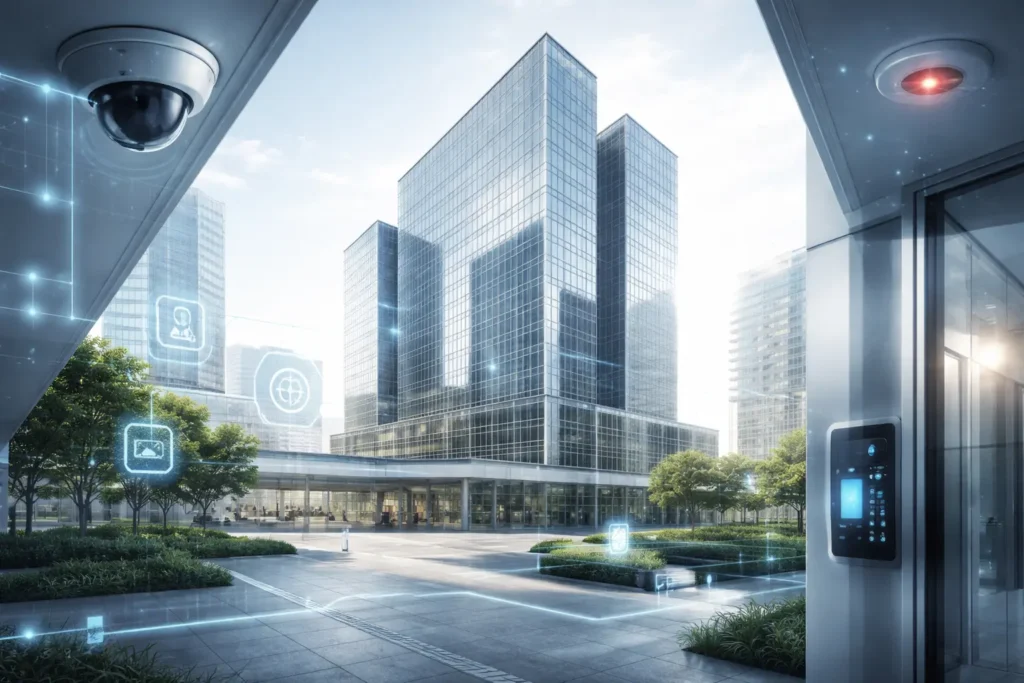
For property owners and facility managers, building security is no longer a standalone function, it directly affects business continuity, assets protection, and human safety. A decade ago, building security was considered sufficient with on-site security personnel and static CCTV cameras. Today, however, the threat landscape has changed dramatically. Understanding the future of building security is no longer just about keeping up with trends—it has become a fundamental necessity to protect assets, data, and human lives in an increasingly complex digital era.
The Shift from Reactive to Proactive Security
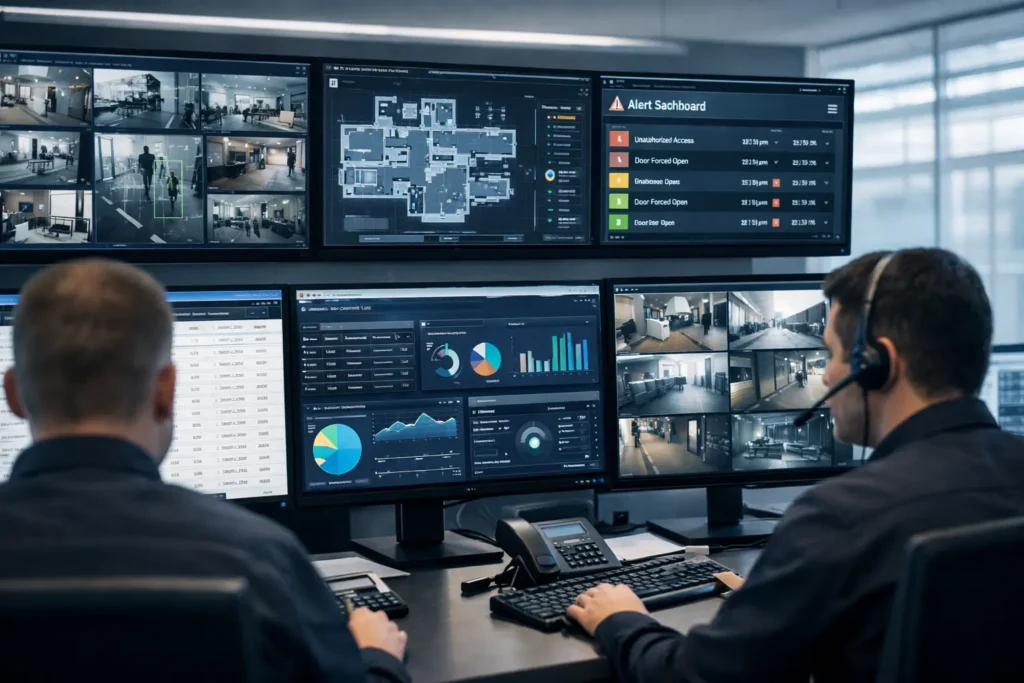
For decades, physical security systems were largely reactive—we responded only after an incident occurred by reviewing recorded footage. In the future of building security, this approach is no longer sufficient. Modern security strategies are shifting toward proactive and predictive prevention, enabled by intelligent, integrated systems.
Through the integration of Artificial Intelligence (AI), today’s security systems can analyze behavior patterns and detect anomalies in real time, allowing potential threats to be identified before they develop into serious incidents. These systems do not simply record events; they interpret context and intent. By distinguishing between normal activity and genuine security risks, AI-driven security forms a critical foundation for smarter, safer buildings, and large-scale facilities in the year ahead.
1. AI Integration and Video Analytics
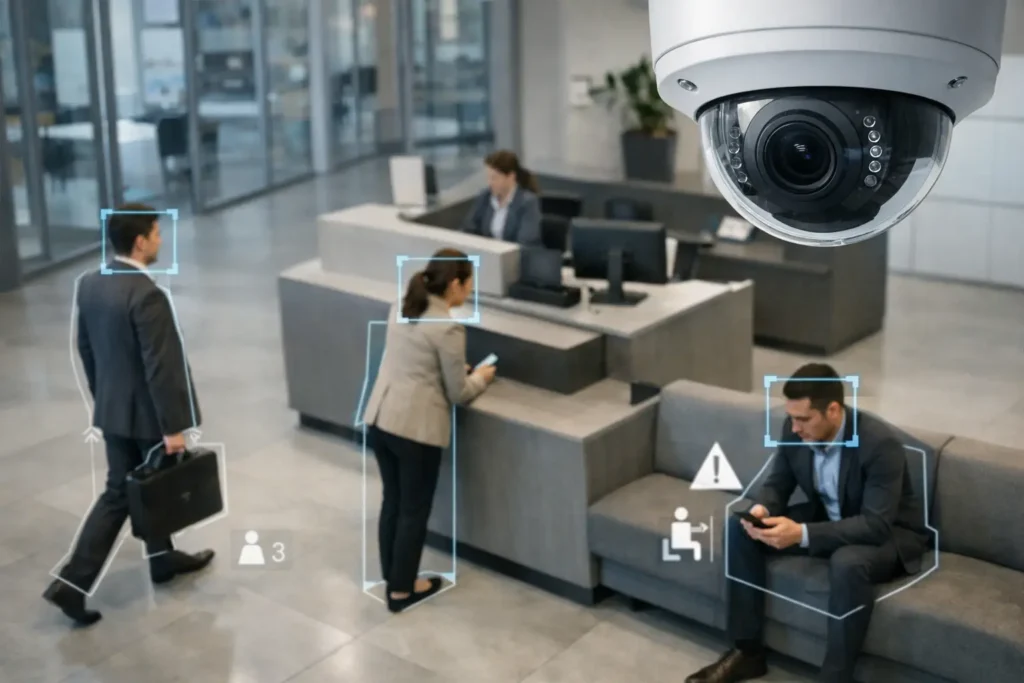
Artificial intelligence is at the core of the future of building security, transforming conventional CCTV cameras into intelligent sensors capable of real-time video analytics. Instead of merely recording footage, modern security systems can analyze behavior patterns, recognize faces, and detect anomalies as they happen, enabling instant alerts when unauthorized individuals enter restricted areas or when suspicious movement is identified. This AI-driven capability allows building operators to shift from passive monitoring to proactive risk prevention, strengthening overall security readiness across modern properties and large-scale facilities.
2. Contactless and Biometric Access Control
Contactless technologies are becoming a key part of the future of building security, replacing traditional access cards that are easily lost or duplicated. Mobile credentials and biometric solutions such as facial recognition, palm vein scanning, and iris recognition enable secure, touchless access based on verified digital identities. This approach enhances security, improves user convenience, and supports more efficient access management in modern buildings and facilities.
3. A Connected IoT (Internet of Things) Ecosystem
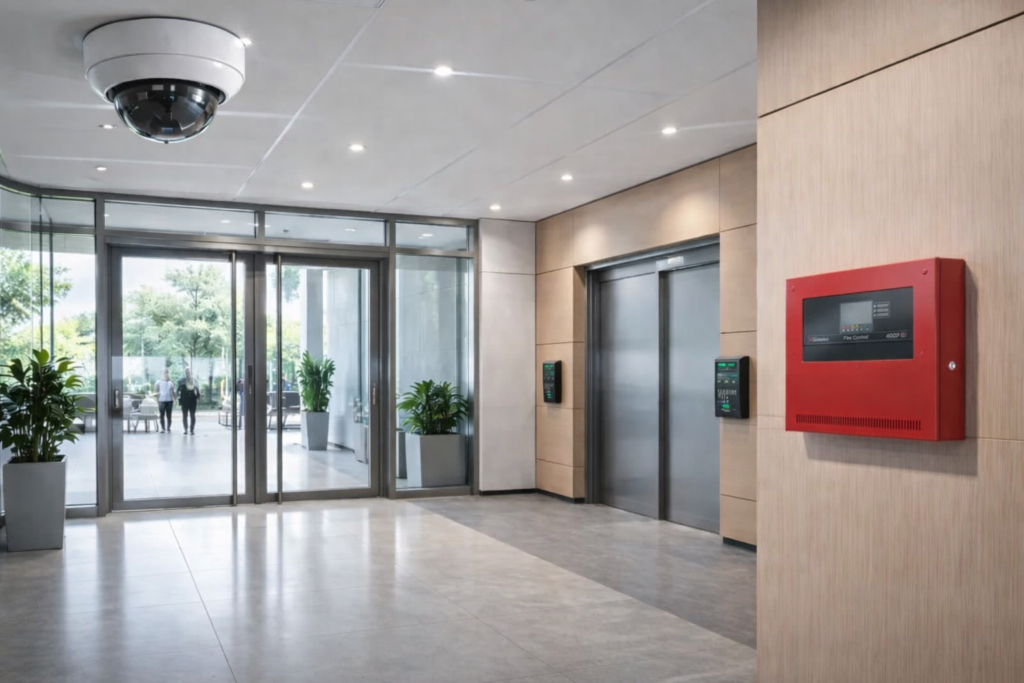
Future building security systems will no longer operate in isolated silos, but as part of an integrated Building Management System (BMS). In the future of building security, IoT sensors will connect security systems with lighting, elevators, and fire detection to enable coordinated responses. When a fire sensor detects smoke, access control systems can automatically unlock emergency exits while cameras focus on the affected area to support emergency responders. This seamless integration plays a critical role in creating safer, more responsive, and more resilient building environments.
4. Cybersecurity in Physical Infrastructure
As security systems become more digital, cyber threats emerge as a critical risk in the future of building security. Smart buildings connected to networks can become targets for cyberattacks if systems are not properly protected.. For this reason, cybersecurity must be treated as an essential component of physical security infrastructure. End-to-end encryption and multi-factor authentication (MFA) are now mandatory to ensure that cameras, sensors, and control systems do not become entry points for digital threats.
5. Cloud-Based Security Management
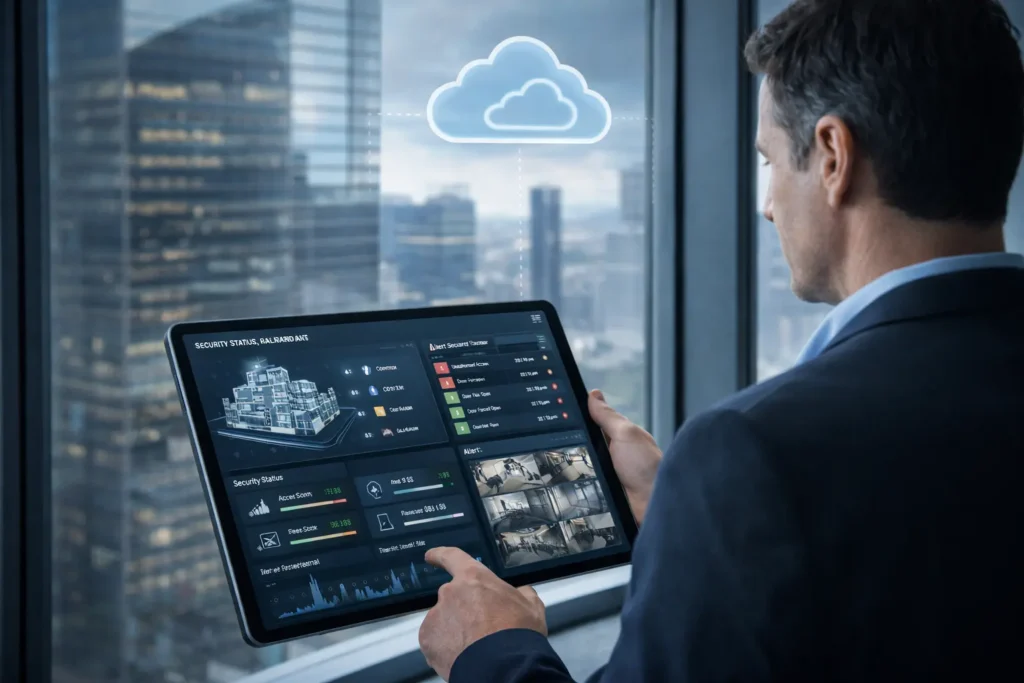
Local data storage on on-site servers is increasingly being phased out due to high maintenance costs and vulnerability to physical damage. As part of the future of building security, organizations are shifting toward Cloud-Based Video Surveillance (VSaaS). Cloud solutions allow building managers to monitor security systems from anywhere using secure digital access . This model also offers greater scalability, enabling storage expansion without additional hardware investments.
Privacy and Ethical Challenges
While advanced technology enhances protection, privacy considerations remain a critical concern in the future of building security. The increasing use of facial recognition and data-driven surveillance raises important ethical questions that cannot be ignored. Organizations must ensure compliance with data protection regulations, including Indonesia’s Personal Data Protection Law (UU PDP). Clear transparency in how data is collected, stored, and deleted is essential to maintaining trust among building occupants and stakeholders.
Economic Benefits for Property Owners
Adopting technologies aligned with the future of building security should be viewed merely as a strategic investment rather than a cost.. Integrated and automated security systems reduce dependence on large numbers of manual personnel, helping lower long-term operational expenditures (OPEX). At the same time, buildings with higher security standards benefit from increased asset value and stronger tenant confidence. This advantage often translates into more competitive rental rates and improved long-term returns for property owners.
Are You Ready to Face the Future?
Amid rapid technological advancements and increasingly complex threats, security can no longer be managed as a standalone function. In the future of building security, integrated security and safety systems have become a core foundation of modern property operations and large-scale facilities. The seamless integration of digital surveillance, access control, and fire protection systems is no longer an optional upgrade. It is now a critical standard to ensure business continuity, operational resilience, and human safety.
Addressing the future of building security requires a strategic partner that goes beyond supplying hardware and is capable of designing a fully integrated security ecosystem. Sepro Indonesia (PT. Sekuriti Properti Indonesia) fulfills this role by combining expertise in Security Systems, Fire & Evacuation System, and system integration. With a holistic approach, Sepro unifies multiple security technologies into a single, efficient, and resilient platform that supports the operational needs of modern properties and large-scale facilities.
Sepro Indonesia has been trusted as a professional solution provider across a wide range of critical and commercial sectors, including heavy industries such as mining and transportation infrastructure like airports and seaports. Its experience also extends to major property developments and public facilities, including:
- Factories and industrial estates
- High-rise buildings and premium office spaces
- Shopping centers (malls) and residential apartments
- Hospitality and other public facilities
This diverse project portfolio reflects Sepro’s capability to deliver integrated security solutions tailored to the operational needs of different property types.
With a client-oriented approach tailored to specific requirements, Sepro ensures that every asset is protected by intelligent, adaptive security systems aligned with international standards.
Prepare Your Property for the Future
Do not let the complexity of security systems limit your operational efficiency. If you are planning to develop or modernize security systems for large-scale facilities, engage with our team to define the right strategy.
Contact Sepro Indonesia to receive professional consultation and discover how integrated security solutions can deliver long-term protection, operational reliability, and peace of mind for your property investments.