In the accelerated digital transformation era of 2025, security standards for office buildings, shopping centers, and industrial facilities have evolved significantly. In the past, security was often defined by the number of guards stationed at entry points. Today, threats are far more complex, ranging from coordinated physical intrusions to cyberattacks targeting interconnected building systems. Understanding commercial building security weaknesses is no longer a secondary responsibility for Facility Management (FM) teams; it has become a critical foundation for business continuity and asset protection.
Many building operators assume their facilities are secure simply because numerous CCTV cameras are installed. However, without regular security audits, proper configuration, and system integration,, these cameras often serve only as passive visual tools with limited protective value. This article examines the most common commercial building security weaknesses found in modern properties and outlines practical audit-driven solutions to address risks before they result in operational disruption or significant loss.
1. Overlooked Blind Spots

One of the most common commercial building security weaknesses is the presence of blind spots within video surveillance coverage. Camera placement often prioritizes visible areas such as main lobbies and corridors, while less prominent zones (rear entrances, loading docks, service corridors, and emergency stairwells) remain insufficiently monitored. These overlooked areas are frequently targeted by intruders seeking to avoid detection.
The risk is amplified when outdated or low-resolution cameras are used, especially in low-light environments when critical details are easily missed. Addressing their weakness requires a thorough surveillance audit and the deployment of modern solutions such as AI-enabled cameras, 360-degree coverage, and advanced low-light technology to ensure continuous, real-time monitoring across the entire property.
2. Untracked Access Control
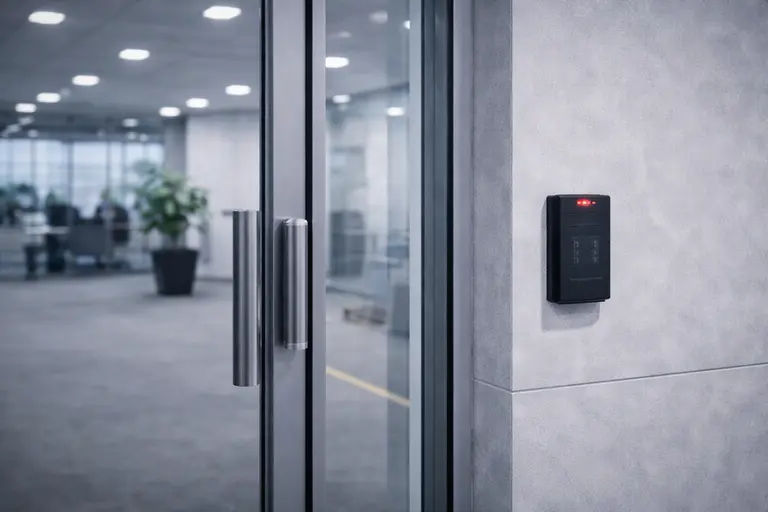
Another critical commercial building security weakness is the continued use of physical keys or access cards without centralized monitoring and control. Over time, former employees, contractors, or third-party vendors may still retain access to restricted areas, creating significant security exposure. Without real-time access management and automated identity verification, unauthorized entry can occur without detection.
These access control gaps often lead to internal security incidents, including data breaches, asset theft, or sabotage. To mitigate this risk, building managers should adopt biometric or cloud-based access control systems that enable instant access revocation through a centralized platform. This approach ensures every entry and exit is accurately logged, providing reliable audit trails for ongoing security assessments and incident investigations.
3. Outdated Fire Protection Systems

Security extends beyond crime prevention to include disaster and life-safety protection. One frequently overlooked commercial building security weakness is the continued reliance on outdated or poorly maintained fire protection systems. Aging alarm panels and detection modules may fail to communicate with central systems during electrical faults, one of the leading causes of fires in commercial properties.
Failing to upgrade fire protection systems exposes building owners to serious legal and operational risks. By 2025, fire safety infrastructure should be integrated with intelligent smoke and heat detectors capable of delivering early warning directly to facility management teams through mobile alerts. This level of integration enables rapid response and mitigation within seconds, significantly reducing the potential spread and impact of fire incidents.
4. Non-Integrated Monitoring Systems
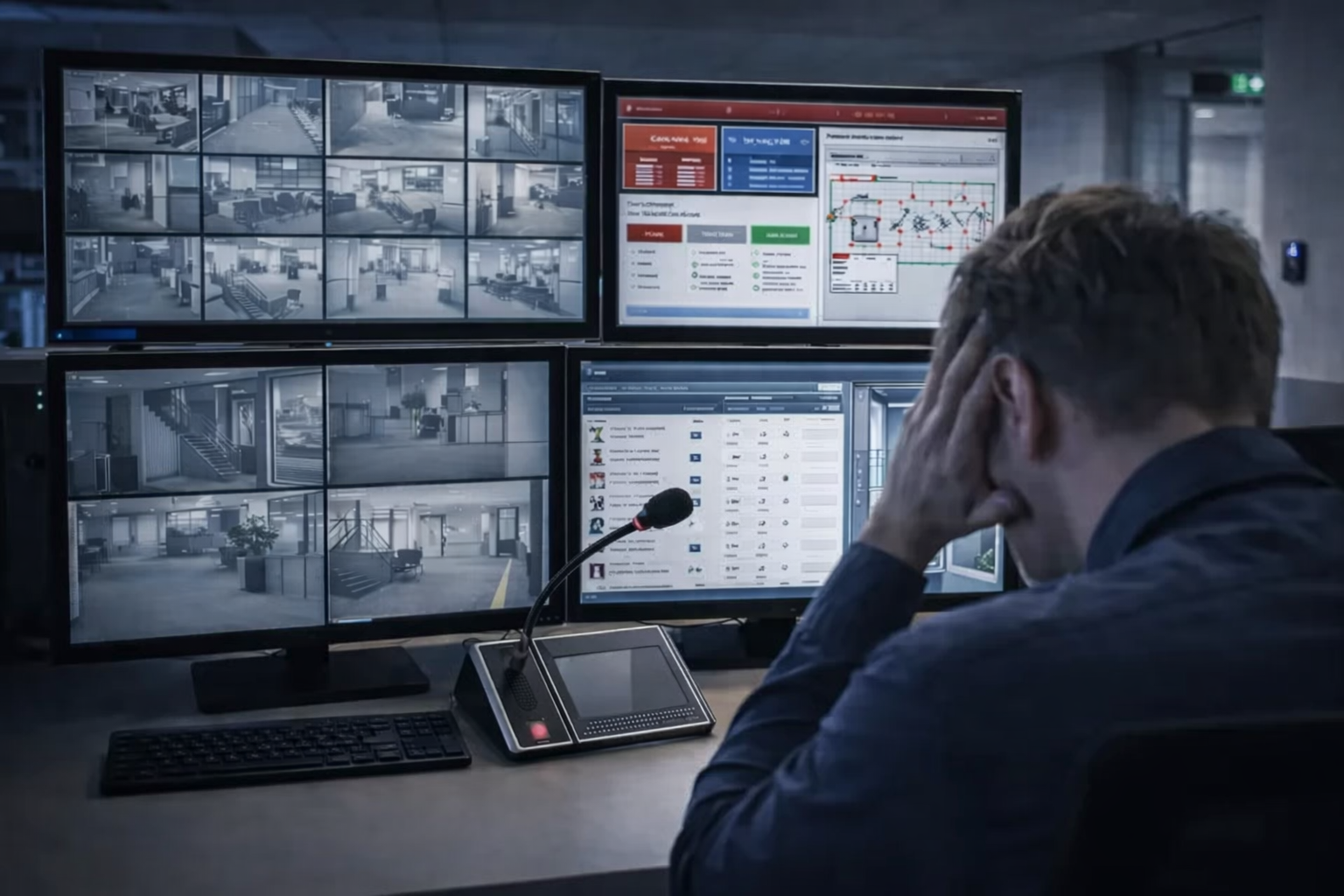
A persistent commercial building security weakness is the use of siloed systems, where CCTV, fire alarms, motion sensors, and access control operate on separate platforms. During incidents, security and operations teams are forced to switch between multiple applications and disconnected screens, slowing response and increasing the risk of human error.
This fragmentation significantly delays critical decision-making. Integration systems through an Integrated Building Management System (IBMS) consolidates all security data into a single control interface. With this unified approach, suspicious activity detected in one area can automatically trigger nearby cameras to focus on the location and simultaneously secure surrounding access points, enabling faster and more coordinated incident response.
5. IoT and Cybersecurity Vulnerabilities
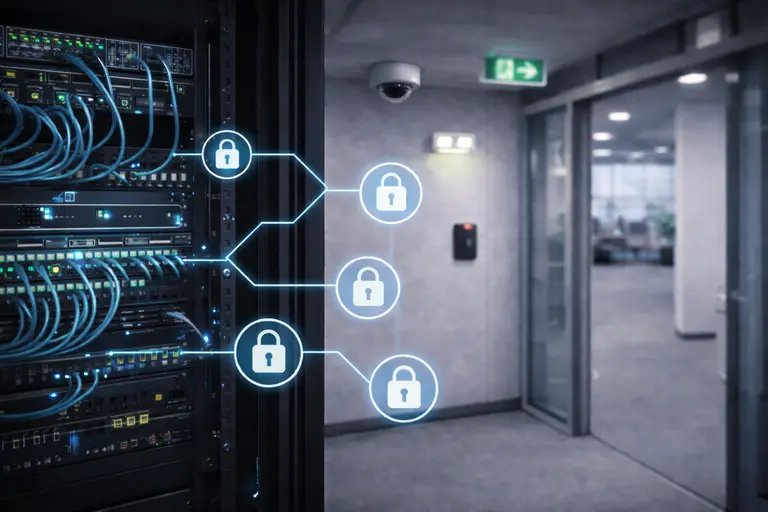
As smart building technologies continue to expand, new commercial building security weaknesses emerge in the form of cyber threats. IoT devices such as smart lighting, HVAC sensors, and environmental monitors are often connected to internal networks without sufficient encryption or security hardening. These devices can become unintended entry points for attackers, allowing them to access sensitive data to disrupt critical building systems remotely.
The lack of cybersecurity integration within physical infrastructure is one of the most dangerous commercial building security weaknesses today. To mitigate the risk, building operators must implement network segmentation strategies, such as separating operational technology (OT) networks from corporate and public networks using VLANs. This approach significantly reduces exposure to cyber exploitation while strengthening the overall resilience of building security systems.
Why Regular Security Audits Are Essential
Identifying commercial building security weaknesses is only the first step. The more critical action is conducting structured and professional security audits before incidents occur. Many building managers only recognize vulnerabilities after a breach or failure, when financial loss and reputational damage are already unavoidable.
Regular audits enable early risk detection and allow facility teams to prioritize upgrades and allocate budgets more strategically. When approached proactively, security becomes a long-term investment rather than a reactive expense, enhancing property value, operational stability, and peace of mind for tenants and stakeholders alike.
Closing Security Gaps Through a Strategic Approach
Addressing commercial building security weaknesses requires a comprehensive and strategic approach rather than isolated fixes. This includes continuous staff awareness training to prevent social engineering threats, regular updates to security hardware, and the deployment of AI-based video analytics capable of automatically detecting abnormal behavior and potential risks in real time.
No security system is ever completely immune to vulnerabilities. However, by systematically reducing commercial building security weaknesses through layered protection and intelligent technology, organizations can significantly strengthen their defense posture. Do not allow your commercial property to become an easy target due to outdated systems or inadequate access monitoring, proactive security planning is essential for long-term resilience and protection.
Secure Your Building’s Future with Sepro Indonesia
Managing commercial building security weaknesses requires specialized expertise and advanced, integrated technology. From surveillance blind spots to complex system integration challenges, attempting to manage security independently often leaves critical gaps. As a building owner or manager, ensuring the safety of occupants and assets is a fundamental responsibility.
If you want to eliminate commercial building security weaknesses that could disrupt operations or damage your reputation, partnering with professionals is essential. Sepro Indonesia delivers end-to-end security solutions, from comprehensive security audits and integrated system design to advanced technology implementation and responsive operational support. With proven experience in risk management and modern security infrastructure, Sepro helps position your property at the highest standard of safety.
Do not wait for an incident to reveal vulnerabilities. Protect your assets, employees, and brand reputation today. Contact Sepro Indonesia for professional security consultation and establish your commercial building as a benchmark for security excellence.