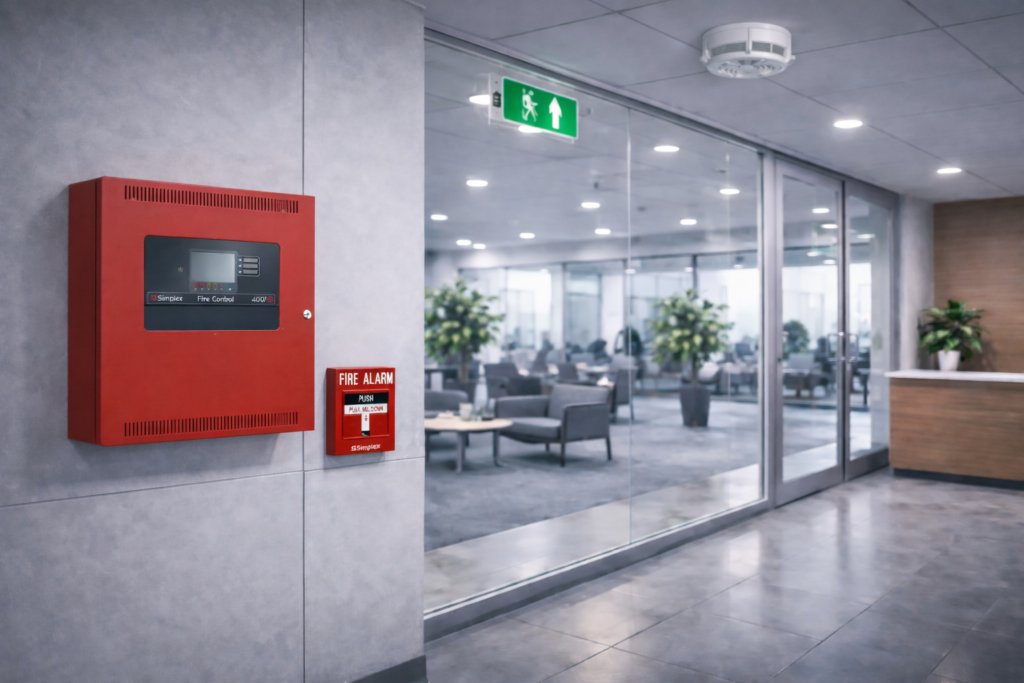
Fire safety is no longer just an administrative requirement for obtaining operational permits. As infrastructure development accelerates and property asset value increases, effective fire risk management has become a critical pillar of business continuity. For building owners, procurement teams, and HSE (Health, Safety, and Environment) professionals, consistently applying for a building fire safety checklist is a strategic investment, one that is far more cost-effective than the potential losses caused by a single fire incident.
Why Does Your Building Need a Standardized Checklist?
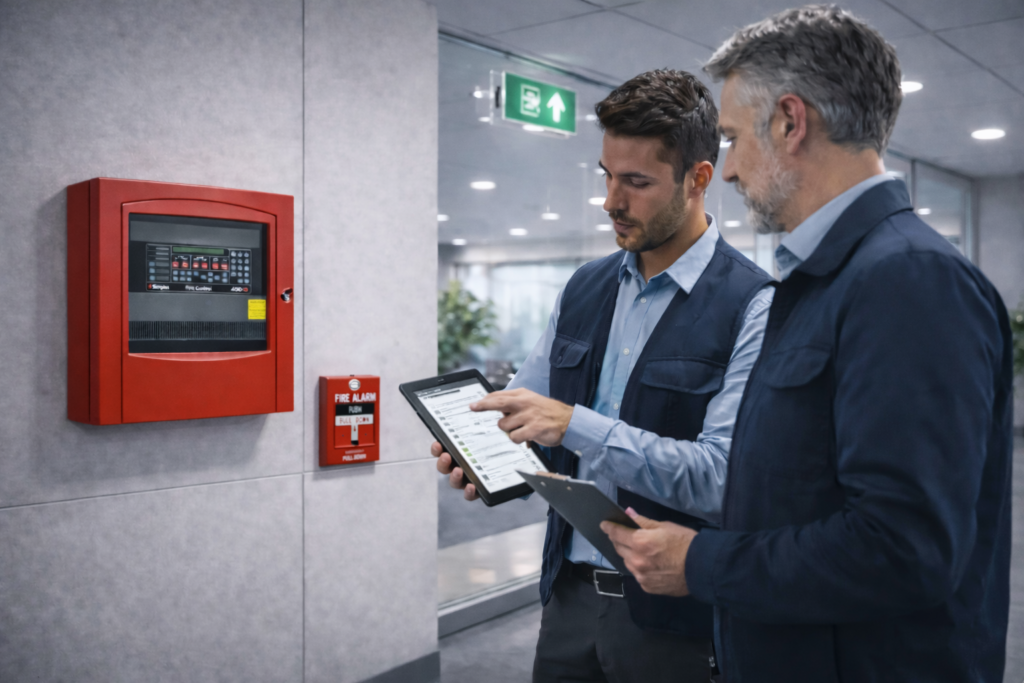
Many assume that installing fire extinguishers alone is sufficient for fire protection. In reality, failures often occur not because equipment is absent, but due to poor maintenance or procedures that are not clearly understood. This is why a comprehensive building fire safety checklist is essential. It functions as a practical self-audit tool, ensuring that every element, from fire protection systems to personnel readiness, remains fully operational and compliant.
For procurement teams, a standardized checklist helps define clear technical specifications and ensures vendor compliance with SNI or international standards. For building owners, it serves as an effective safeguard against depreciation by systematically reducing fire-related risks.
1. Active Fire Protection Systems: The First Line of Defense
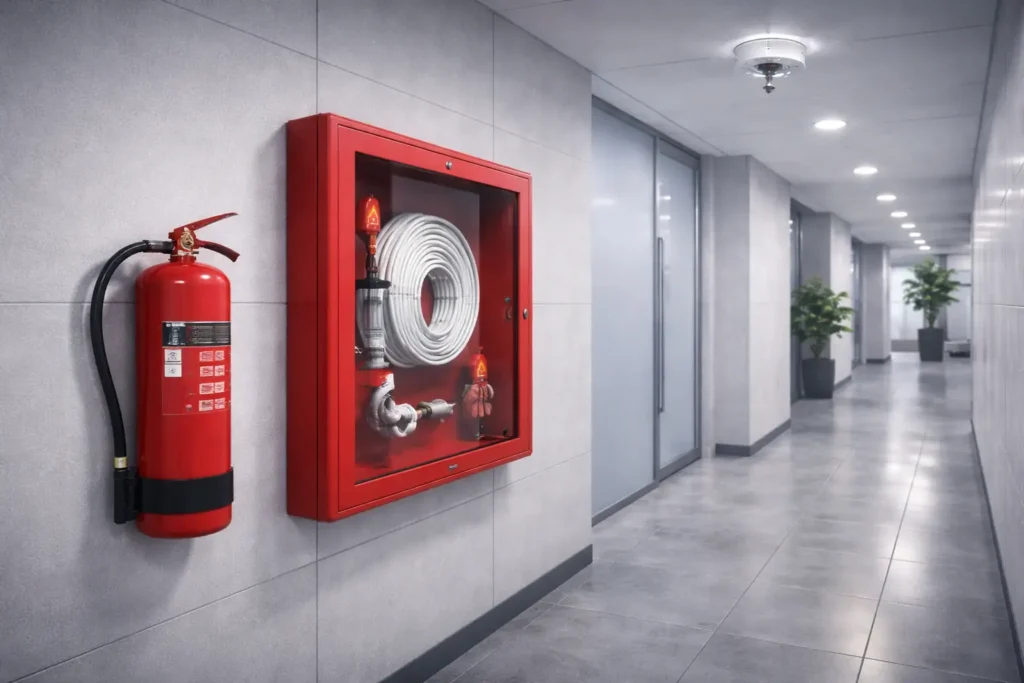
Active fire protection systems require direct action, either automatic or manual, to control or suppress fire incidents. Within a building fire safety checklist, these systems should be prioritized and inspected regularly, at least on a monthly basis, to ensure immediate readiness during emergencies.
Portable Fire Extinguishers (APAR)
Fire extinguishers serve as the first response when a fire is still in its early stage. Ensure the following points are met:
- Placement: Installed at intervals of no more than 15 meters along evacuation routes.
- Mounting Height: Mounted on walls with a maximum height of 120 cm for easy and quick access..
- Technical Condition: Pressure gauges must remain in the green zone, hoses free form cracks or leaks, and safety seals intact and unbroken.
Hydrant and Sprinkler Systems
For larger-scale fires, hydrant and sprinkler systems play a critical role in fire suppression. As part of a building fire safety checklist, hydrant inspections should include checking cabinet accessibility, nozzle availability, and ensuring hoses function properly without leaks under water pressure. Sprinkler systems must also be kept free from obstructions such as shelving or decorations, allowing water to discharge evenly and effectively when the system is activated.
2. Fire Detection and Alarm Systems
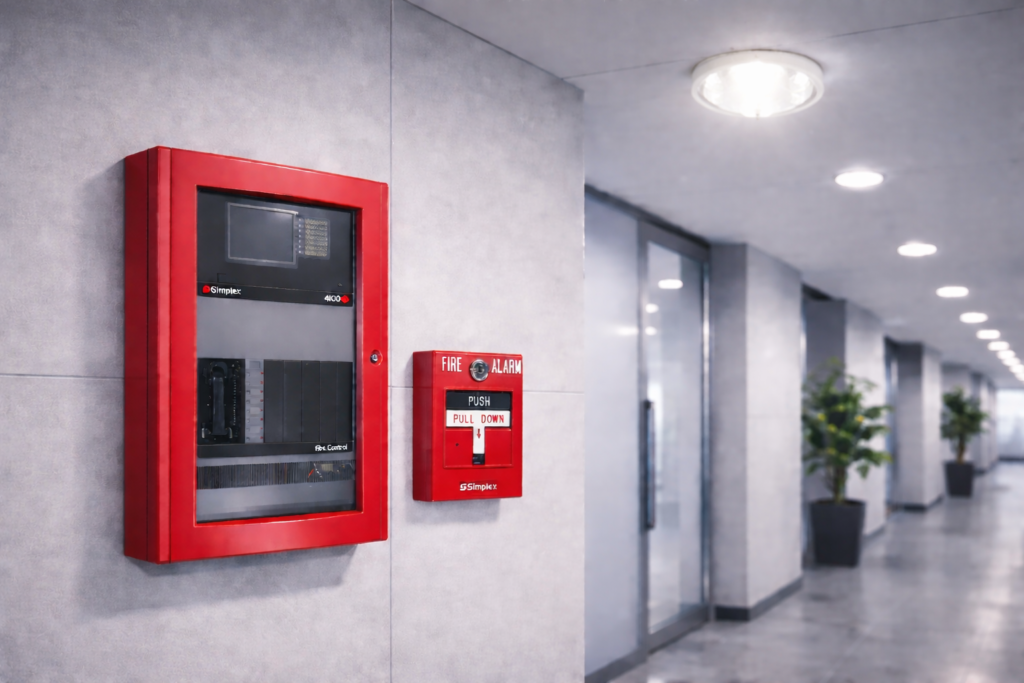
Early detection is critical to minimizing casualties during a fire incident. Fire detection and alarm systems are among the most technical elements in a building fire safety checklist and must be inspected regularly to ensure reliability.
- Smoke & Heat Detectors: Smoke detectors in office areas and heat detectors in kitchens or high-risk zones must function correctly. Random functional testing should be conducted at least once a month.
- Manual Call Points: Break-glass call points must remain clearly visible, easily accessible, and free from obstructions such as furniture or equipment.
- Fire Alarm Control Panel (MCFA): The main control panel must operate without error or trouble indicators. Backup batteries should always be fully charged to ensure continuous operation during power outages.
Neglecting detection and alarm systems within a building fire safety checklist can lead to delayed evacuation and severe consequences, particularly in high-rise buildings with high occupant density.
3. Evacuation Facilities: Lifelines for Occupants
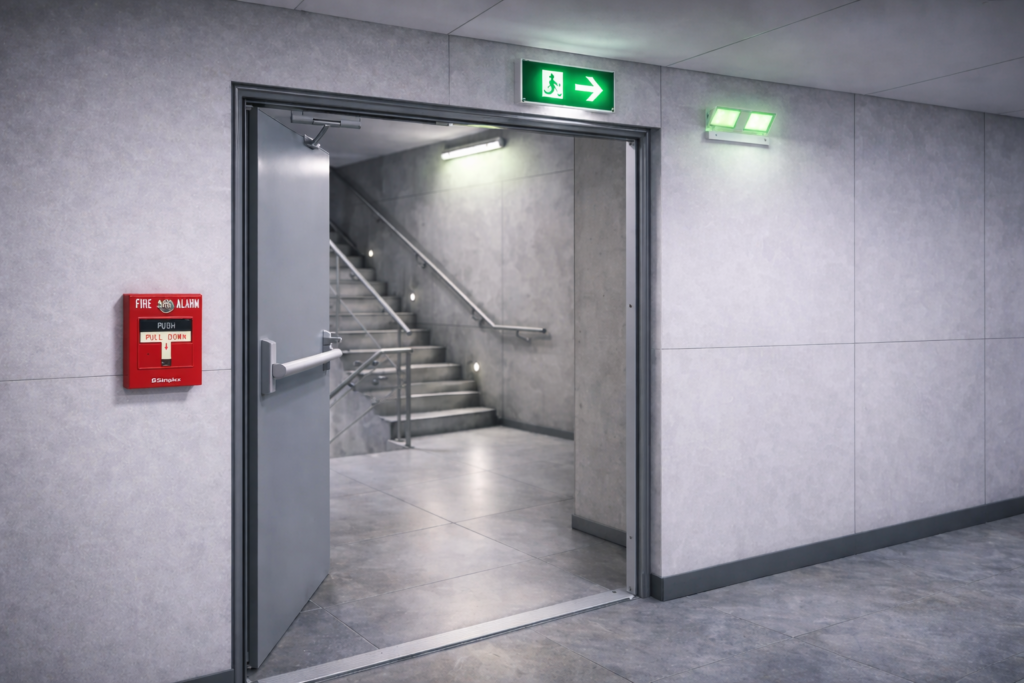
While active fire protection systems work to suppress fires, evacuation facilities are focused on saving lives. Within a building fire safety checklist, the effectiveness of evacuation facilities is measured by how easily they can be used during panic situations or under low-visibility conditions.
- Emergency Exit Doors: Must be fire-rated and equipped with panic bars. Doors should open with a single push and close automatically after use.
- Emergency Staircases: Stairwells must remain clear at all times and must never be used for storage. Smoke infiltration into these areas should be strictly prevented.
- Emergency Lighting: Emergency lighting must activate automatically when main power fails and provide adequate illumination along evacuation routes leading to designated assembly points.
Keeping evacuation routes clear, accessible, and well-lit is a critical requirement in every building fire safety checklist, ensuring the safety of all occupants without exception.
4. Building Fire Safety Management (MKKG)
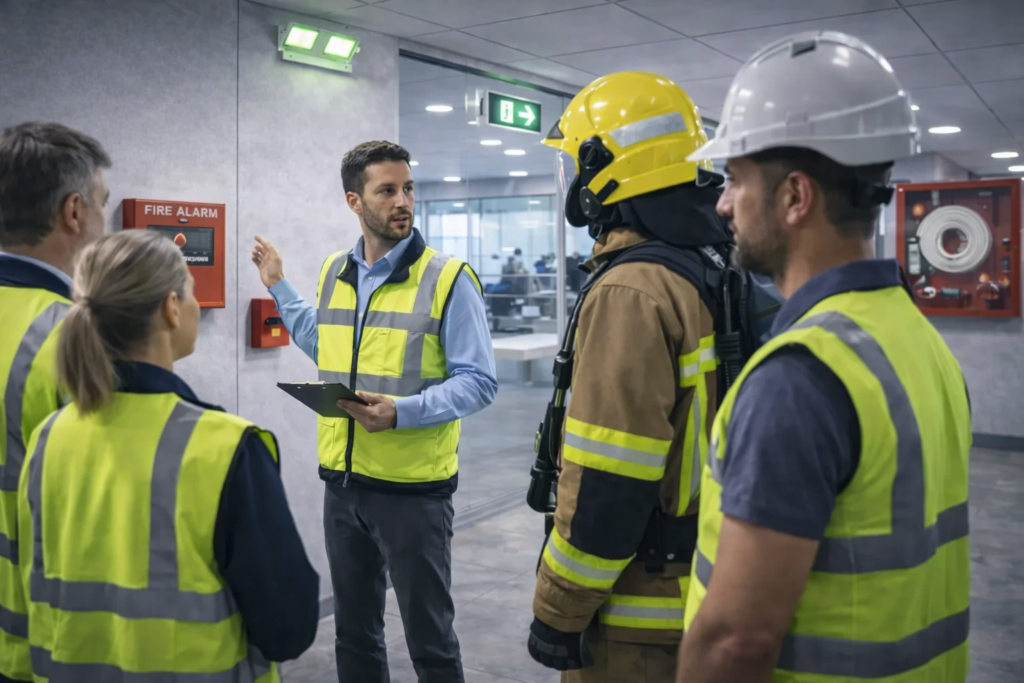
Even the most advanced fire protection equipment will not function effectively without trained and prepared personnel. As part of a building fire safety checklist, safety management must include structured staff training and the formation of an emergency response team with clearly defined roles, such as fire suppression, evacuation coordination, and first aid.
Fire drills should be conducted regularly, ideally at least twice a year to test preparedness and response effectiveness.. Through realistic simulations, building management can evaluate response times, identify weakness in evacuation routes, and ensure all occupants are familiar with emergency procedures.
5. Procurement Strategy for Optimal Safety
For procurement teams, ensuring product quality is a direct contribution to overall fire safety. Within a building fire safety checklist, procurement standards should prioritize fire protection equipment with clear certifications and compliance with applicable regulations. Purchasing decisions should not be based solely on the lowest price, but also consider warranty coverage, ease of maintenance or refilling, and the vendor’s track record in providing reliable after-sales support.
6. Self-Assessment Checklist Table
Below is a simplified reference table that can be used as an initial guideline when developing internal fire safety documentation. This building fire safety checklist helps management quickly monitor compliance status and inspection frequency across key safety areas.
| Inspection Category | Key Inspection Points | Ideal Frequency |
| Active Protection | Extinguisher Pressure, Hydrant Hose Condition, Fire Pumps | Monthly |
| Detection Systems | Smoke Detector Function, MCFA Panel Status | Quarterly |
| Evacuation Routes | Emergency Doors (Unlocked), Exit Lights | Weekly |
| Human Resources | Fire Drill Training, Emergency Team Readiness | Semi-Annually |
The 2025 building fire safety checklist provides a practical reference for facility managers to monitor compliance, inspection frequency, and operational readiness in accordance with fire safety standards.
Conclusion
Fire safety strategy is not a one-time administrative task that ends once documents are approved. The consistent implementation of a building fire safety checklist is the most effective preventive approach to identify system weakness early, avoid regulatory penalties, and most importantly protect human lives and valuable property assets.
Managing fire protection systems alongside daily building operations can be complex and demanding. This is where Sepro Indonesia plays a critical role as your strategic partner. As a provider of integrated fire and safety solutions, Sepro Indonesia supports building owners, procurement teams, and HSE professionals in ensuring every component of the building fire safety checklist complies with applicable national and international standards.
Do not postpone the evaluation of your fire protection systems. Ensure your facility is supported by a comprehensive, expert-validated building fire safety checklist. Together with Sepro Indonesia, you are not only meeting regulatory requirements, but also cultivating a professional, accountable, and sustainable safety culture.
Consult Sepro Indonesia today for fire safety audits, certified equipment procurement, and comprehensive fire safety management training, because a safe building is the foundation of uninterrupted productivity and long-term operational success.