As buildings become larger, smarter, and more digitally connected, television distribution systems have evolved significantly. One of the most common questions raised by property owners, consultants, and system integrators is MATV vs IPTV. Although both systems are used to deliver television content within buildings, they rely on different technologies and serve different operational purposes.
Understanding MATV vs IPTV is essential when planning television infrastructure for hotels, hospitals, apartments, offices, and public facilities. Choosing the wrong system can lead to unnecessary costs, limited functionality, or difficulties in future expansion. Choosing the right system, or combining both, can improve user experience and long-term efficiency while supporting future digital needs.
Understanding MATV and Its Core Purpose
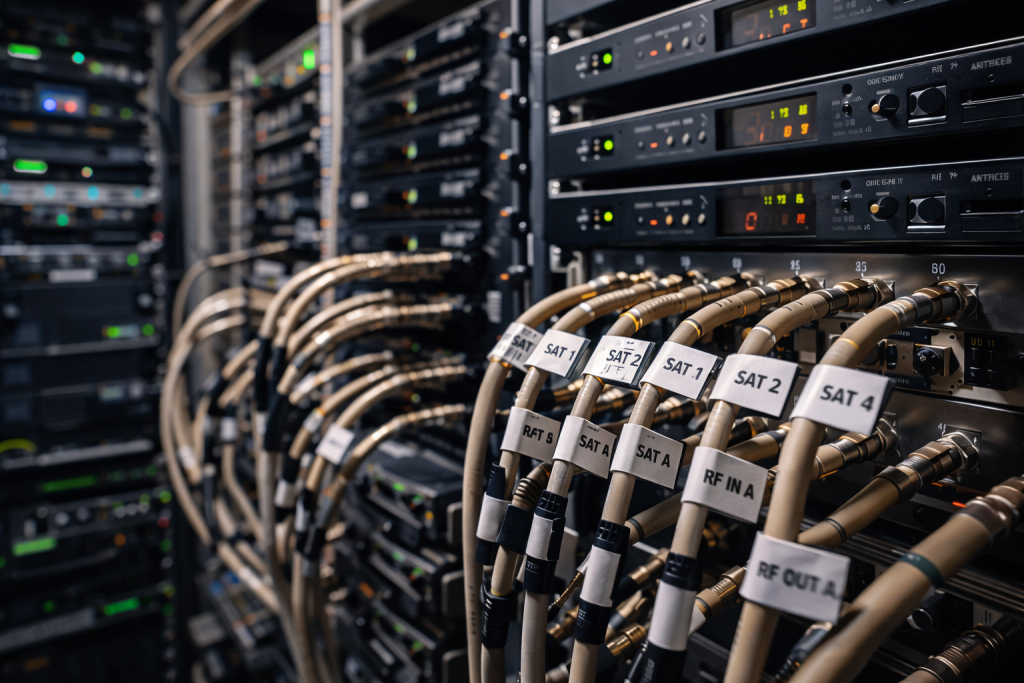
MATV, or Master Antenna Television, is a centralized system that receives television signals from satellite, terrestrial, or cable sources and distributes them throughout a building. Modern MATV systems operate digitally and are designed to deliver stable signal quality across large properties.
In the MATV vs IPTV discussion, MATV is often seen as a traditional solution, but it remains highly relevant. Digital MATV systems are reliable, efficient, and ideal for buildings that require consistent channel delivery with minimal operational complexity. Hotels, residential apartments, and dormitories commonly use MATV because it provides uniform content to all users without relying heavily on IP networks.
Once a MATV system is properly designed and installed, it requires relatively low maintenance and offers predictable performance over long periods.
Understanding IPTV and How It Works
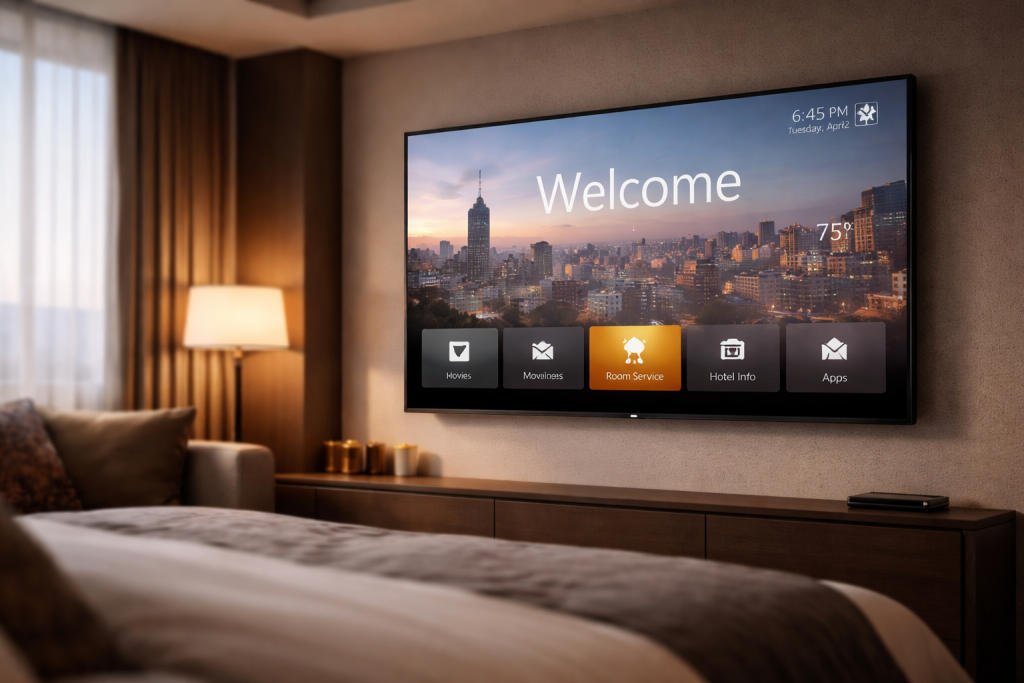
IPTV, or Internet Protocol Television, distributes television content over IP networks rather than traditional broadcast cabling. Content is delivered as data streams within a private and controlled network environment.
When comparing MATV vs IPTV, IPTV stands out for its flexibility and advanced features. IPTV systems support interactive menus, video on demand, information pages, and customized user interfaces. Content can be adjusted based on room type, user profile, or operational needs, making IPTV a powerful communication tool as well as an entertainment platform.
IPTV is widely used in hotels, hospitals, corporate buildings, and campuses where engagement and information delivery are critical. Because IPTV depends on network performance, proper bandwidth planning and system design are essential for stable operation.
Key Technology Differences Between MATV and IPTV
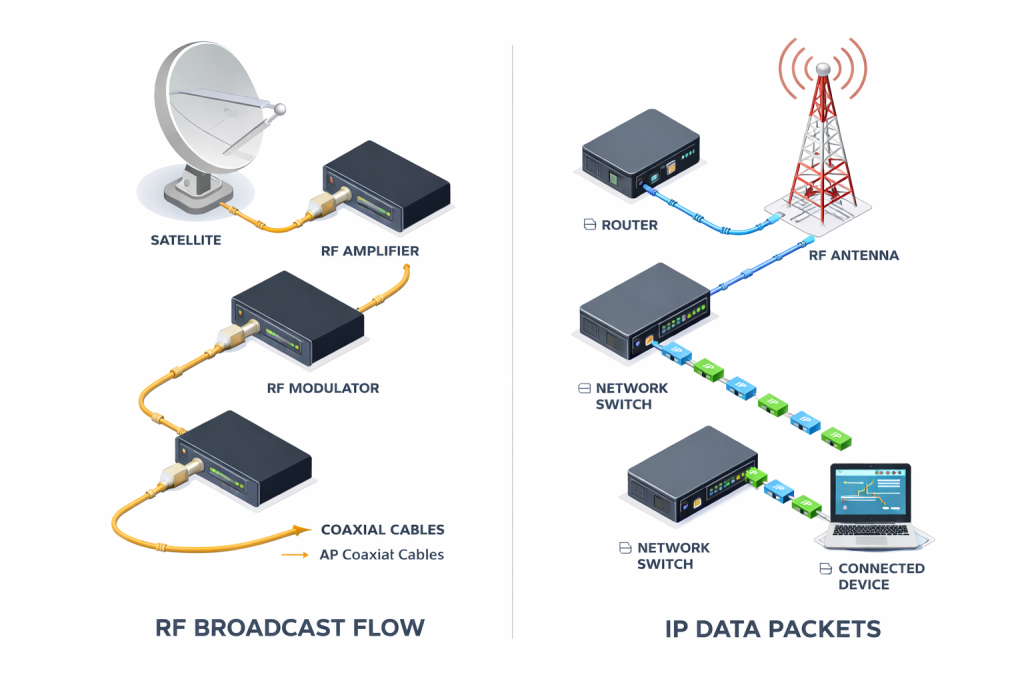
The main difference in MATV vs IPTV lies in how television content is delivered. MATV distributes broadcast signals through coaxial or hybrid cabling, while IPTV streams content as IP data over a network.
This technical difference affects scalability, system design, and operational complexity. MATV systems are hardware-focused and less dependent on network performance. IPTV systems are software-driven and rely heavily on network stability and configuration.
Because of this, MATV is often chosen for simplicity and reliability, while IPTV is selected for flexibility and advanced digital services. The optimal solution depends on the building’s functional goals rather than technology trends alone.
User Experience and Content Control

From a user perspective, MATV delivers a familiar and straightforward television experience. Channels are accessed in a traditional way, making it intuitive for users of all ages. This simplicity is often preferred in residential buildings and standard hospitality environments.
In the MATV vs IPTV comparison, IPTV offers a richer and more interactive experience. Users can access on-demand content, announcements, and service information directly from the TV screen. For operators, IPTV enables centralized content control and real-time updates, supporting more dynamic communication.
This difference in user experience is one of the main reasons IPTV is commonly adopted in premium and service-oriented buildings.
Choosing Between MATV, IPTV, or a Hybrid Solution
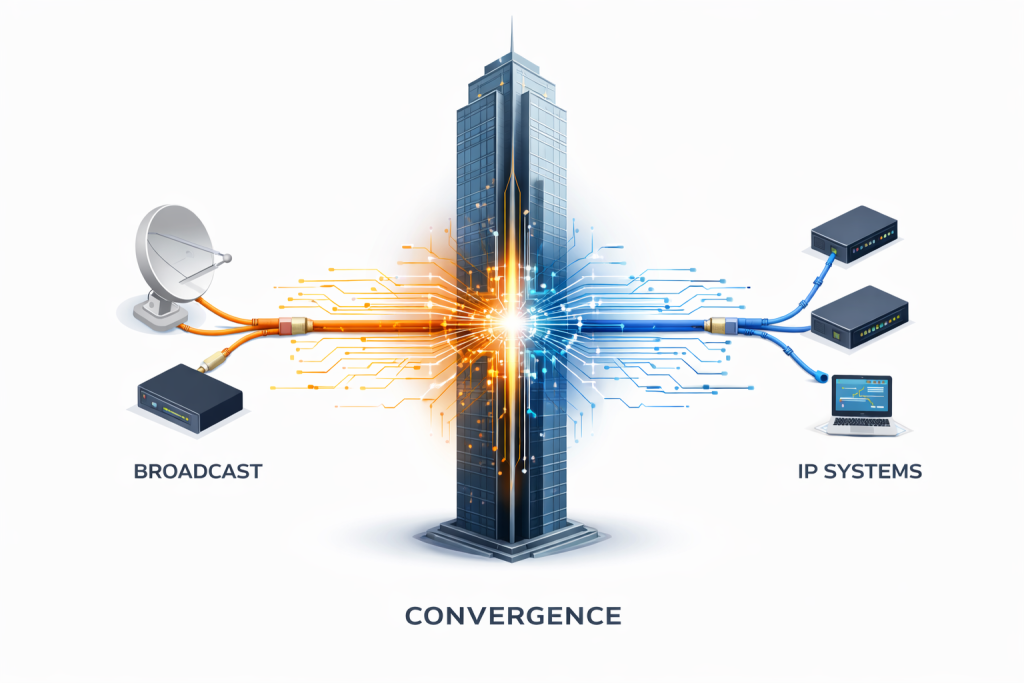
The MATV vs IPTV discussion does not always end with selecting one system. Many modern buildings adopt a hybrid approach that combines MATV for reliable broadcast television and IPTV for interactive and premium services.
This approach balances reliability, cost efficiency, and advanced digital functionality. It also allows building owners to adapt their systems over time as user expectations and technology evolve.
Contact Sepro Indonesia
If you are planning to upgrade or integrate your building security systems, Sepro Indonesia is ready to support you. Our team provides end-to-end solutions (from system assessment and design to installation and long-term maintenance) tailored to your building’s operational needs.
Contact Sepro Indonesia today for professional consultation and discover how integrated security solutions can improve safety, efficiency, and control across your facility.