
Have you ever been inside a high-rise building when a fire alarm suddenly sounds at an overwhelming volume? In many cases, the immediate reaction is not preparedness, but confusion—whether the alarm signals a real emergency, a drill, or a system error. This uncertainty wastes critical evacuation time. This is where the function of voice evacuation alarm systems becomes essential, as clear voice instructions replace ambiguity with guidance, directing occupants calmly and efficiently to safety instead of relying solely on sirens or bells.
In building safety management, replacing noise with clear communication represents a critical advancement.. Understanding the function of voice evacuation alarm systems is essential for building owners, facility managers, and safety professionals to ensure calm, structured, and effective technology works and why it provides a more reliable and controlled response compared to traditional alarm systems. This article examines how voice evacuation technology works and why it provides a more reliable and controlled response compared to traditional alarm systems.
What Is a Voice Evacuation Alarm System?
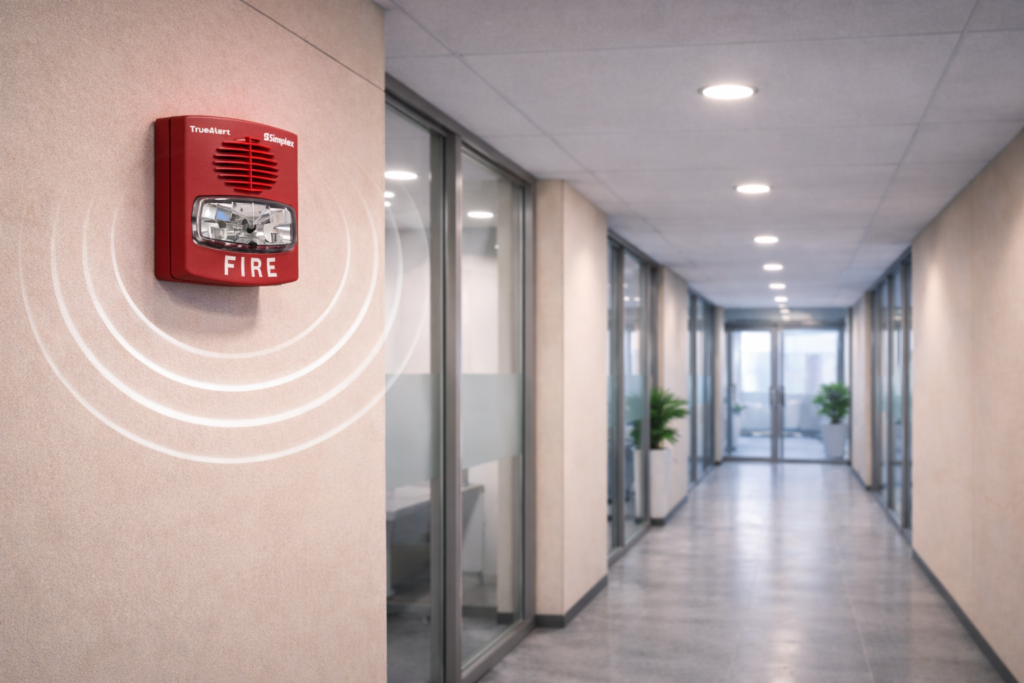
Simply put, a Voice Evacuation System integrates fire detection with a Public Address (PA) system to deliver clear, actionable instructions during emergencies. Unlike conventional fire alarms that rely solely on loud sirens, this system provides contextual information that occupants can immediately understand. The core function of voice evacuation alarm systems is to translate danger signals into clear verbal guidance, helping people respond correctly even if they are unfamiliar with the building layout.
Many building managers are shifting from standard bells or sounders to voice-based systems due to their proven effectiveness in emergency situations. International safety standards such as NFPA 72 emphasize voice intelligibility as a critical requirement in evacuation systems.. The function of voice evacuation alarm systems is to ensure emergency messages remain clearly audible above ambient noise, deliver precise instructions, and minimize the risk of confusion that often occurs with tone-only alarms.
Four Key Functions of Voice Evacuation Alarms in Building Safety

The implementation of voice evacuation systems is not merely a technological upgrade, but a critical requirement for reducing risk and ensuring occupant safety during emergencies. Understanding the function of voice evacuation alarm systems is essential for delivering clear guidance, minimizing panic, and enabling orderly evacuation in complex building environments. Below are four key functions that define their role in modern building safety.
1. Guiding Phased Evacuation
In high-rise buildings and large complexes, evacuating all occupants at the same time can increase risk rather than reduce it. When large crowds move simultaneously toward emergency exits and stairwells, congestion can occur, leading to dangerous bottlenecks and potential injuries. Voice evacuation systems address this challenge by enabling phased and zone-based evacuation, allowing people to exit in a controlled and orderly manner.
This is where the function of voice evacuation alarm systems demonstrates its effectiveness through phased evacuation. The system can be configured to deliver evacuation instructions only to priority zones, such as the fire floor and the floors directly above and below it, while other areas receive standby instructions.. By using zone-specific voice messages, evacuation flows remain controlled, and emergency stairwells are prevented from becoming overcrowded.
2. Reducing Ambiguity and Preventing Panic
Loud, continuous sirens are known to increase heart rate and trigger panic-driven, irrational responses during emergencies. In contrast, a calm and authoritative human voice helps stabilize emotions and reduce anxiety. This psychological effect allows occupants to remain focused, follow instructions, and evacuate in a more orderly manner.
The effectiveness of the function of voice evacuation alarm systems lies in their ability to clearly confirm the situation during an emergency.. Messages such as, “Attention, a fire has been detected in the Main Lobby. Please remain calm and proceed to the rear exit,” provide specific, actionable guidance that occupants can immediately understand. Compared to abstract sirens or beeping sounds, verbal instructions significantly improve comprehension and response speed. Studies show that people react faster and more accurately to clear voice messages, helping reduce overall evacuation time and confusion.
3. Delivering Specific and Directional Instructions
Fire emergencies are dynamic, and evacuation conditions can change rapidly as smoke or flames block primary escape routes. Conventional bell alarms are unable to adapt or provide direction in these situations. With the function of voice evacuation alarm systems, real-time automated messages can guide occupants away from hazardous areas and toward safer alternative exits. This adaptive communication significantly improves evacuation safety and decision-making during evolving emergency conditions.
For example, the system can broadcast clear instructions such as, “Attention, do not use the elevators. Please proceed to the west emergency stairwell.” The ability to deliver both restrictive guidance (what actions to avoid) and directional instructions (where to go) is a key advantage of voice evacuation systems, providing a level of control and clarity that conventional sounders cannot achieve.
4. Dual Efficiency: Public Address and Emergency System
Many building managers are concerned about initial investment costs. However, the function of voice evacuation alarm systems offers cost efficiency through a dual-purpose design. During normal daily operations, the system also functions as a Public Address (PA) system for background music and routine building announcements, maximizing the value of a single integrated infrastructure.
When a fire signal is received from the Master Control Fire Alarm (MCFA) panel, the system automatically overrides background music and immediately broadcasts prioritized emergency messages. This intelligent switching ensures that critical instructions are delivered without delay. As a result, there is no need to install separate speaker systems for daily use and emergency alerts, since a single integrated voice evacuation system can effectively perform both functions.
How Voice Evacuation Systems Work
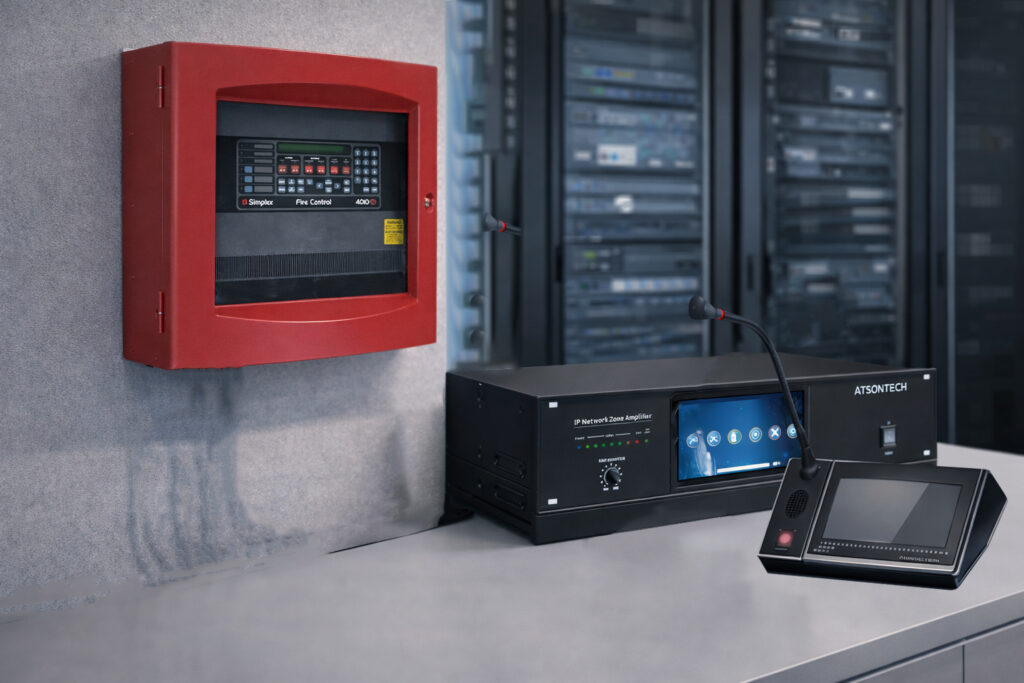
During a crisis, the system operates through a clear and automated sequence. Smoke or heat detectors first send a signal to the central control panel, which then activates the voice evacuation system. Pre-recorded emergency messages are broadcast automatically, or authorized security personnel can deliver live instructions using an emergency microphone. This process ensures that accurate, real-time guidance is delivered immediately when it is needed the most.
It is important to note that the reliability of the function of voice evacuation alarm systems depends heavily on the quality of their core components, including amplifiers, controllers, and fire-resistant speakers. To ensure continuous operation during emergencies, the system must also be supported by backup batteries. This allows critical evacuation instructions to remain audible even if the building’s main power supply is disrupted by fire or other incidents.
Why Must Your Building Upgrade?

Beyond the non-negotiable requirement of life safety, regulatory compliance is another key driver behind the adoption of voice evacuation systems.. In Indonesia, national standards (SNI) and local fire authority regulations increasingly recommend voice emergency communication, particularly for high-rise buildings, hospitals, and shopping centers. These regulations recognize the critical role of clear voice instructions in supporting safe and orderly evacuations.
Ignoring the function of voice evacuation alarm systems allows the risk of “blind evacuation” to persist within a building. Without clear verbal guidance, occupants may evacuate without understanding the safest routes or appropriate actions. In occupational safety and healthy (K3) audits, the presence of a voice-guided evacuation system is considered a significant added value. It can also contribute to improved risk profiles, potentially leading to lower property insurance premiums due to enhanced emergency preparedness and mitigation.
Conclusion
Occupant safety must always remain the highest priority and should never be compromised. Transitioning to voice-based evacuation technology is not simply a facility upgrade, but a strategic investment in saving lives. As outlined above, the function of voice evacuation alarm systems is essential enabling orderly, rapid, and low-panic evacuation during emergency situations.
Given the complexity of system installation and the need for seamless integration between fire detection and public address systems, partnering with an expert in fire safety standards is essential. Proper design and integration ensure that voice evacuation functions reliably when it matters most. Do not wait until confusion occurs during a real emergency to address this critical requirement.
Discuss your building’s fire protection and evacuation system requirements with the expert team at Sepro Indonesia. We support the design, installation, and maintenance of voice evacuation solutions that are reliable, integrated, and compliant with Indonesian safety standards. Contact Sepro Indonesia to ensure your building is prepared with a clear, effective, and regulation-ready evacuation system.